
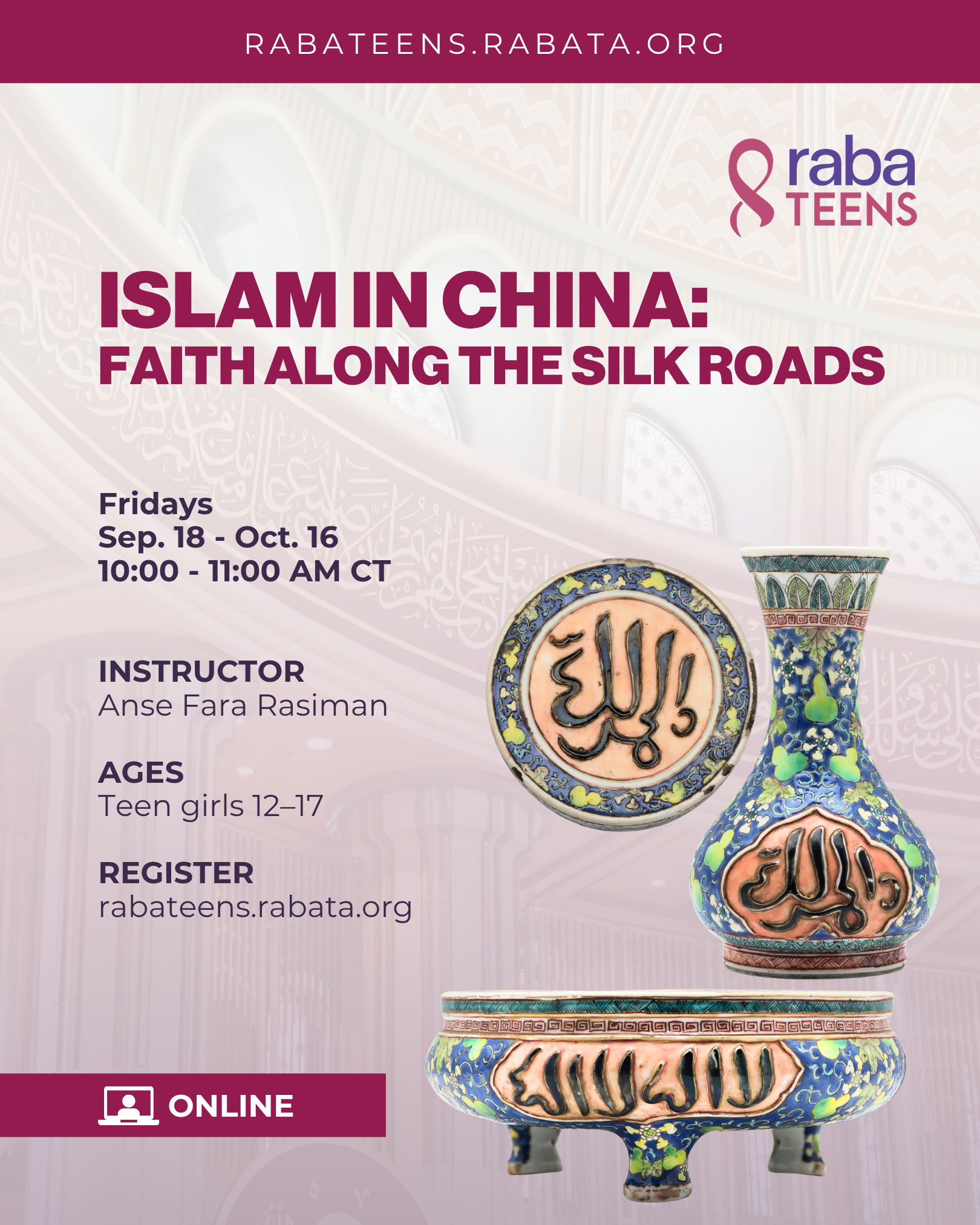
Islam in China: Faith Along the Silk Roads
Fall 2026
RabaTEENS is a nurturing space for deep and meaningful Islamic spiritual mentorship with compassionate and caring mentors. We design fun, creative, and positive educational experiences to help teens grow confidently and comfortably into their faith.
Journey across centuries and cultures to discover the fascinating story of Islam in China! Islam in China: Faith Along the Silk Roads invites students to explore how Islam traveled across land and sea, took root in China, and became part of a rich and diverse Muslim history spanning more than a thousand years. From early Muslim merchants and travelers to mosques, scholars, families, and communities, students will discover how Muslims preserved their faith while making a home within Chinese society.
Over five weeks, students will journey along the Silk Roads, explore the beauty of Chinese Muslim culture and architecture, meet scholars who expressed Islamic ideas in the Chinese language, and discover the remarkable legacy of Muslim women and women’s mosques in China. They will also learn about the diversity of Muslim communities across China and their connections to the wider Muslim world. Through stories, discussions, reflection, and exploration, students will uncover a lesser-known chapter of Muslim history while considering what it means to preserve faith, embrace cultural diversity, build community, and belong to the global ummah.
Week 1: How Did Islam Reach China?
Travel back to the early centuries of Islam and follow the journeys of Muslim merchants, sailors, and travelers to China. Students will explore the Silk Roads and maritime trade routes, discover some of the earliest evidence of Muslim communities in China, and examine the difference between historical evidence and traditional accounts of how Islam first arrived.
Week 2: Chinese AND Muslim
What does it mean to belong to a culture while remaining rooted in Islam? Students will discover how generations of Muslims established communities in China and explore how Chinese cultural traditions influenced Muslim architecture, food, language, and everyday life while Muslim communities maintained their religious beliefs and practices.
Week 3: When Islam Spoke Chinese
Meet Chinese Muslim scholars who faced an intriguing challenge: how do you communicate Islamic beliefs and ideas in a different language and cultural setting? Students will discover scholars such as Wang Daiyu and Liu Zhi, explore the Han Kitab tradition, and consider how Islamic knowledge has traveled across languages and cultures.
Week 4: Muslim Women of China
Discover the remarkable history of Chinese Muslim women as students, teachers, and transmitters of Islamic knowledge. Students will learn about the centuries-old tradition of women’s mosques and female religious teachers known as nü ahong, who taught and served women within their Muslim communities. They will explore the important role women have played in nurturing faith, preserving Islamic knowledge, and educating generations of Chinese Muslims.
Week 5: One Ummah, Many Peoples
China is home to diverse Muslim peoples and communities with different languages, histories, and traditions. In the final week, students will explore some of these communities, their connections with the wider Muslim world, and the different experiences that have shaped Muslim life in China over time. Students will also consider some of the challenges Muslim communities have faced in preserving their faith and identity. The class will conclude by reflecting on what more than a thousand years of Muslim history in China can teach us about faith, resilience, community, and belonging to the global ummah.
None
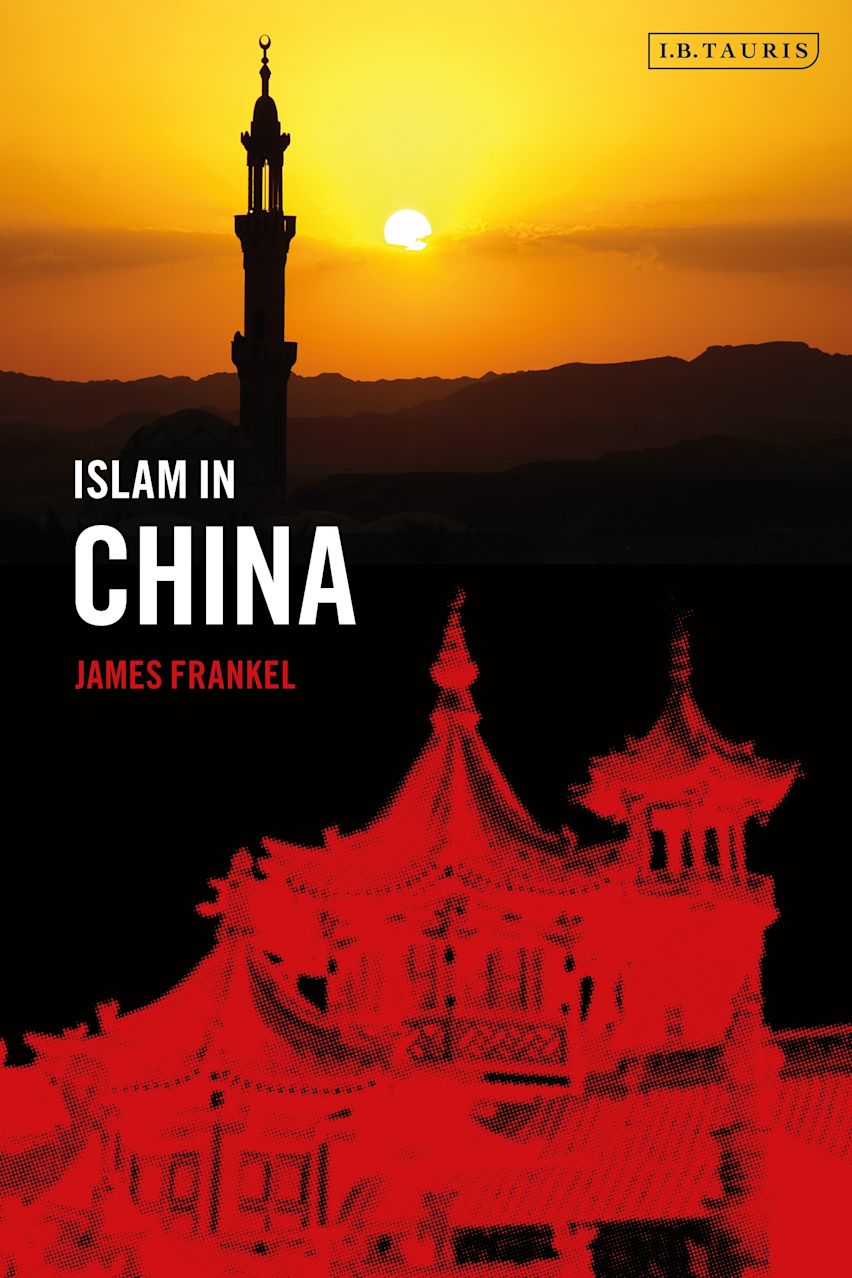
Islam in China
by James D. Frankel
Fridays, 10:00 - 11:00 AM Central Time
Session dates: September 18 - October 16
Students must attend Zoom live sessions. Classes are NOT recorded.
*Enrollment into the RabaTEENS program is on a per-student basis. If two (or more) students are planning to attend a class together by sharing a screen, each student will need to enroll for class individually.
**RabaTEENS programs are for girls aged 12-17 ONLY. Students are required to be 12 already in order to join any of RabaTEENS programs.
Certificates of participation are available upon request.
No refunds are issued once the session begins.
Meets once a week for one hour (5-week session)
Regular price
